The Numbers Behind Becoming a Six-Figure Florist
May 15, 2026
Most florists I talk to have wondered at least once whether floristry is actually a financially sustainable career...if not every day. The question usually comes up late at night, after a slow week, or after watching another florist post about a big wedding while your own inbox is quiet.
Six figures in floristry is real. It's not luck- it's the result of having clarity and going ALL IN.
I'm going to walk you through the 3 options.
Path One: High-End Wedding Flowers
The cleanest path to six figures in floristry is fewer, bigger weddings.
Five weddings a year at $30,000 each gets you to $150,000 in revenue. After cost of goods, labor, and overhead, that puts you in six-figure profit range without a retail location, a full team, or a brutal calendar.
A few things people get wrong about this model:
A $30,000 wedding doesn't mean a 300-person blowout with arches in five rooms. It can mean an intimate event with one big installation, premium florals, and a couple of design moments that justify the budget. Wedding planners working in this tier care more about taste and reliability than spectacle. You're being booked for the level of artistry, not the scale.
The catch with this path is that you can't book a $30,000 wedding by accident. The booking process for high-end weddings is its own skill set. Your portfolio has to be saying something specific. Your inquiry response has to communicate value before price comes up. Your pricing structure has to anchor in a way that makes $30,000 feel reasonable to a client who's never paid that much for flowers.
Without that infrastructure, you'll keep getting inquiries from couples who flinch at $5,000.
Path Two: Retail Flower Deliveries
If you're running a retail-leaning business - walk-ins, deliveries, occasion-based one-offs - six figures comes from layering subscriptions on top of your one-off work.
Here's the math.
The subscription layer: Ten weekly subscriptions at $200 each = $2,000 a week. Over a year that's $104,000 in baseline revenue. This is your floor. It pays the lease, the labor, and the shop's fixed costs whether the walk-in week is slow or busy.
The one-off layer: On top of that, you fill in with retail and delivery orders. A realistic monthly mix in a working retail flower shop:
- 8 orders/month at $65 — smaller bouquets, sympathy stems, walk-ins
- 12 orders/month at $150 — everyday arrangements, birthday, "just because" sends
- 6 orders/month at $350 — bigger occasion pieces, premium delivery, smaller event work
That's around $4,400 a month, or roughly $53,000 a year, on top of the subscription floor.
Total: ~$157,000 a year in revenue. At a 3x markup, that puts you in six-figure profit range before labor and overhead.
This model isn't lighter than the wedding paths. You're running a daily operation, managing inventory waste, doing customer service, processing way more transactions. But it has something neither wedding model has: predictability. Subscription revenue lands like clockwork. You're not waiting six months for a wedding date to deliver income.
The two parts of this model that trip florists up most:
The subscriptions aren't an afterthought. Most retail florists treat them like a side offering and never market them seriously. The shops doing six figures in retail have subscription programs that are a core product, not a random bonus.
The one-off pricing has to be intentional. If your average one-off is $90 instead of $150, the math doesn't work. Pricing your retail offerings at premium points (and presenting them so clients see the value) is what makes the second layer actually profitable.
(Often I see retail florists leaving the higher priced designs off their website. You have to make it an option to sell it!)
Path Three: Mixed Revenue in Wedding Flowers & Retail Flowers
If high-end weddings aren't your scene, the math still works. It just takes more streams.
Here's a model I've seen florists hit six figures with:
- Two weddings a month at $5,500 each. That's roughly $130,000 a year in wedding revenue.
- 60 seasonal arrangements a year at $150 each. Twenty for Valentine's, twenty for Mother's Day, twenty for the winter holidays. That's $9,000.
- Floral subscriptions. Nine clients at $1,000/year for 5-6 occasion-based arrangements. Once you have a base of subscribers, you can hire a designer to handle the production and free yourself up to grow the business further. That's another $9,000.
Add it up and you're at $148,000 in gross revenue with multiple revenue streams supporting each other. The wedding work pays the bills. The seasonal work fills the slow months. The subscriptions create predictable monthly income.
This model is more complex to run, but it spreads the risk. If wedding season is slow one year, the subscriptions and seasonal work keep the lights on.
Floral Business Owners: Which Path Is Yours?
Both models work. But the wrong model for the wrong florist is a slow grind.
Picking the right one isn't about which path sounds better. It's about your actual life, your work style, your local market, and what kind of business you want to run in five years.
A florist who hates retail and wants quiet design days shouldn't be running subscriptions and selling Valentine's arrangements. A florist who thrives on production weeks and a busy studio shouldn't be holding out for five enormous weddings a year.
Most florists I talk to are running some hybrid version of both paths without realizing it, and that's part of why they're not hitting six figures. They're spreading effort across too many models without committing to one.
What Six Figures as a Florist Actually Requires
A few things that aren't optional, regardless of which path:
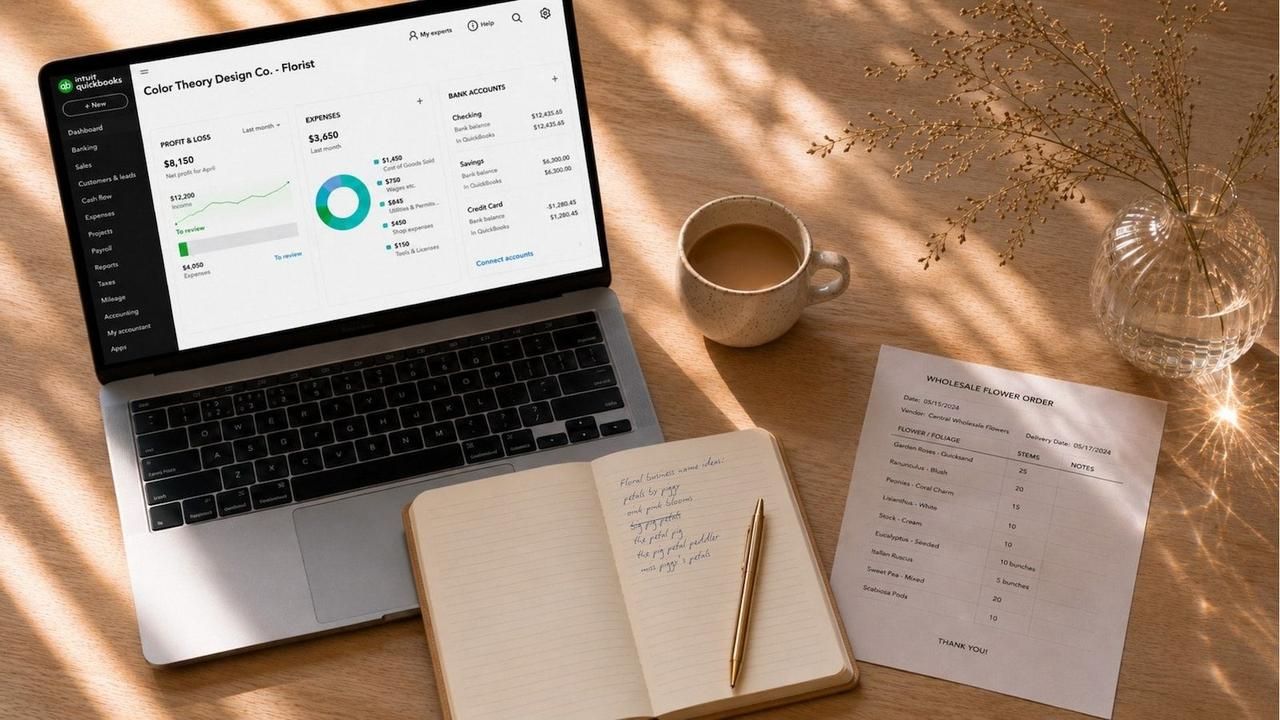
You have to know your numbers. Cost per wedding, cost per arrangement, true profit margin after labor and overhead. Florists who don't know these are usually undercharging by 20–40% and don't realize it.
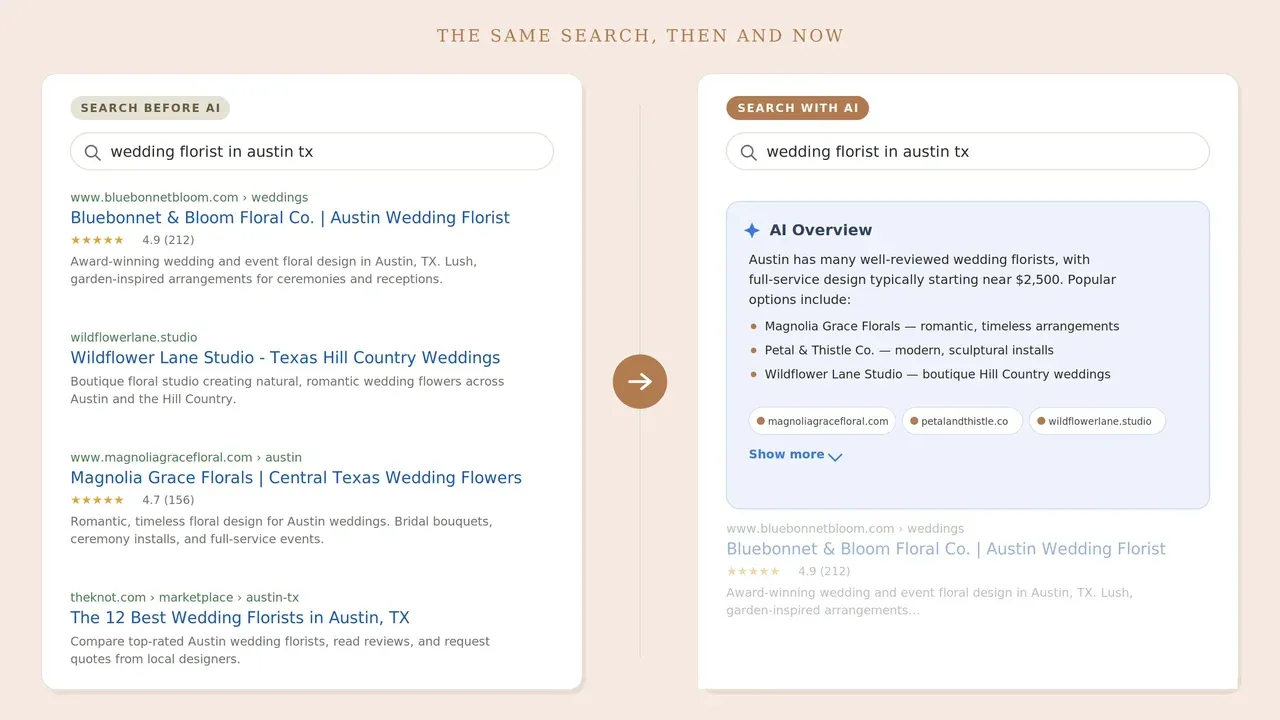
You have to be findable. The most talented florist in town doesn't book if nobody knows she exists. SEO, brand awareness, planner relationships, and a portfolio that books are non-negotiable.
You have to be a business owner, not just a florist! Pricing decisions, hiring decisions, marketing decisions - these are the parts of the job that don't involve flowers and don't get taught anywhere most florists are looking.
That last one is what trips up most florists. The work isn't the bottleneck. The business is.
A Resource for Florist Business Owners
I built Flowering Minds for the part of running a floral business that nobody actually teaches florists. Both paths above have specific classes inside that walk through the mechanics - pricing structures, inquiry response, planner outreach, building a portfolio that books, subscription model setup, the whole thing.
It's also where you get floral mentors who'll help you figure out which path is actually yours, monthly coaching with floral experts, and a Map that tells you which class to start with based on where you are right now.
If figuring out which path you're on (and how to actually execute it) sounds like the part you've been stuck on, the door is open!